

News
Stay updated with the airport news
Manaus Airport Cargo Terminal receives action from the ARA Movement, by Azul Linhas Aéreas
03 de Outubro de 2025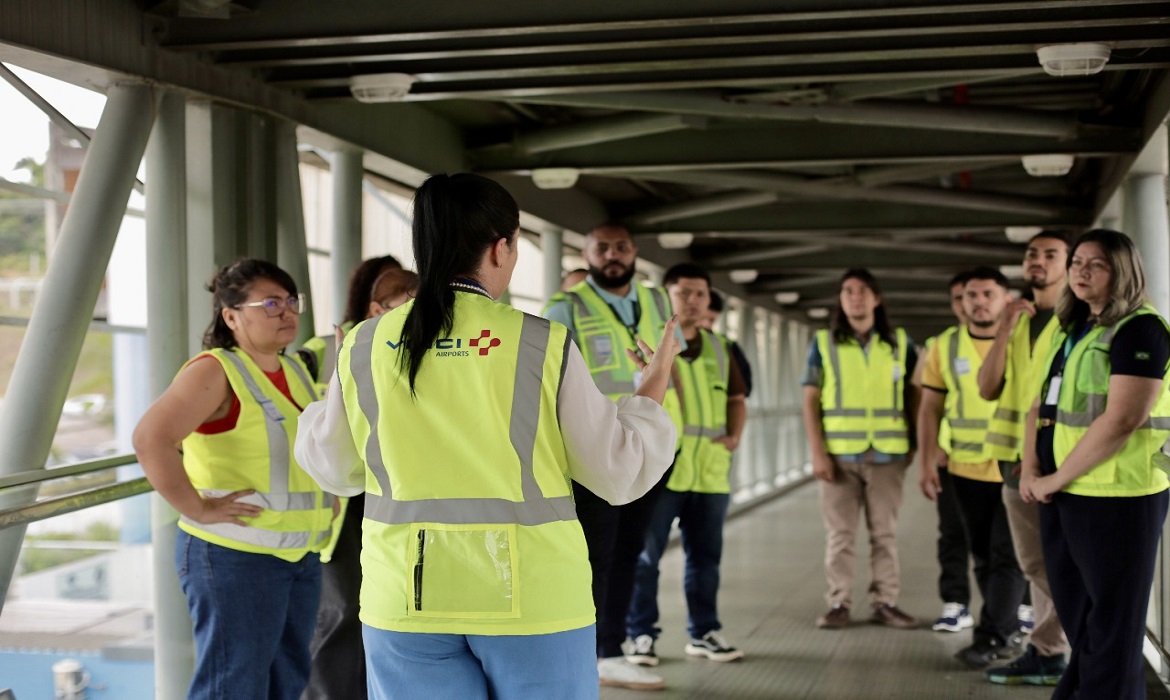
- Training will offer skills development for micro-entrepreneurs in the Amazon;
- Participants will learn about the cargo terminal structure and gain insights into costs, logistics, and marketing to expand their businesses;
- The initiative reflects the commitment of Brazil's third-largest cargo terminal to boost the logistics chain in the Amazon.
The Manaus Airport Cargo Terminal, part of the VINCI Airports network, will host a training session next Wednesday (10/1) by the ARA Movement of Azul Linhas Aéreas, aimed at companies, micro-entrepreneurs, cooperatives, and small businesses in the Amazon region. The goal is to foster the Amazonian socio-bioeconomy and boost the logistics chain in the region. The initiative is also partnered with companies Kuehne+Nagel and Assobio.
During the training, the group of 25 participants will take a guided tour of the entire cargo terminal, learning about export and import operations, receiving information on storage, customs inspection, transport packaging, logistics costs, marketing strategies, and customer loyalty.
The third-largest of its kind in the country, the TECA of Manaus Airport handled around 140,000 tons of products last year alone, operationalized for various economic segments, including imports and exports. The airport receives about 170 cargo flights per month from various parts of the world.
Since taking over the management of the airport, the Concessionaire of the Airports of the Amazon has been promoting the development of air cargo transport in the region, participating in discussions and initiatives that promote the local economy, as well as investing in improvements in the cargo sector, focusing on safety and efficiency.
The ARA Movement – All Amazons under the Same Blue Sky was launched in 2023 by Azul to stimulate the air trade of goods by companies from the Amazonian states, promoting businesses that contribute to keeping the forest standing and fostering the local socio-bioeconomy. Since the creation of the movement, tons of food and handicrafts have been transported, and micro-entrepreneurs have had the opportunity to showcase products at international fairs.

See our latest news
24 de Setembro de 2026
Manaus Airport Cargo highlights the logistical potential of Amazonas for the pharmaceutical industry at an event in São Paulo
27 de Agosto de 2026
Manaus Airport Cargo sets record in July with 11.6 thousand tons handled
26 de Agosto de 2026